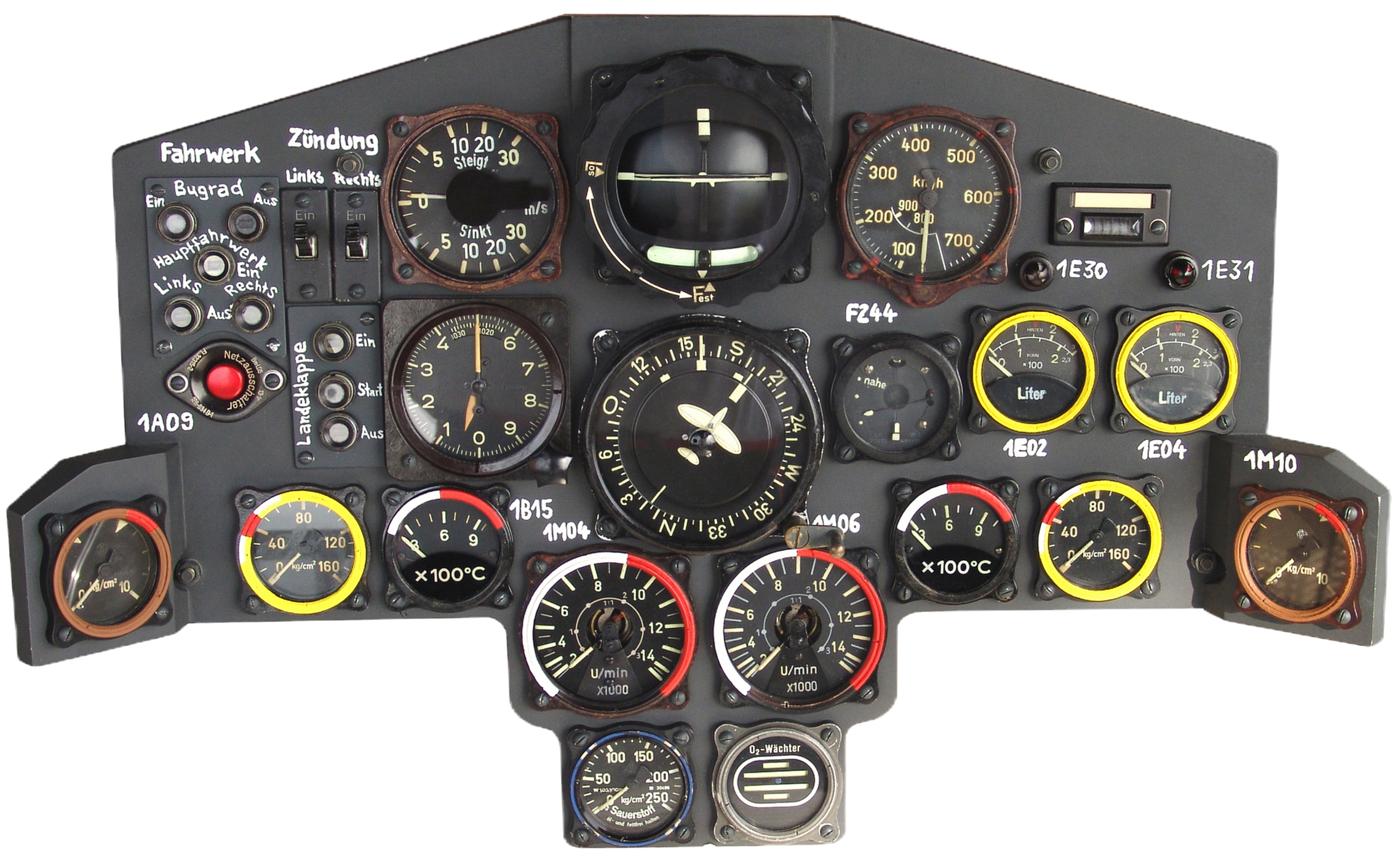

Horten Ho 229 / fighter panel / 1945 / german Luftwaffe
The Horten Ho 229 (also known as the Gotha Go 229) was a pioneering, jet-powered flying wing prototype developed in Germany during the late stages of World War II. It is considered one of the most innovative aircraft of its era and a forerunner to modern stealth technology.
Design and Development
Concept:
The aircraft was designed by brothers Reimar and Walter Horten, pioneers in flying wing construction. Their goal was an aerodynamically highly efficient aircraft with minimal drag, dispensing with a conventional fuselage and tail unit.
"3x1000" Requirement: The development was a response to a tender from Hermann Göring, head of the Luftwaffe, for a light bomber that could carry a 1,000 kg (2,200 lb) bomb load over a distance of 1,000 km (620 miles) at a speed of 1,000 km/h (620 mph) (the "3x1000" requirement).
Construction:
The Ho 229 utilized a mixed construction: the center section was made of welded steel tubing, while the outer wing spars were wooden and covered with plywood skin.
Engines: It was powered by two Junkers Jumo 004B turbojet engines.
Control: Control was achieved using a combination of elevons (combined elevator and ailerons) and spoilers.
Stealth Myth
Contrary to popular myths, the Horten Ho 229 was not intentionally designed as a stealth aircraft in the modern sense. The flying wing's aerodynamic shape naturally reduced the radar cross-section, but historical documents make no mention of deliberate stealth design intentions. Later claims by Reimar Horten that carbon dust was added to the glue of the wooden skin to absorb radar waves have been debunked by Smithsonian analyses, which found no such materials.